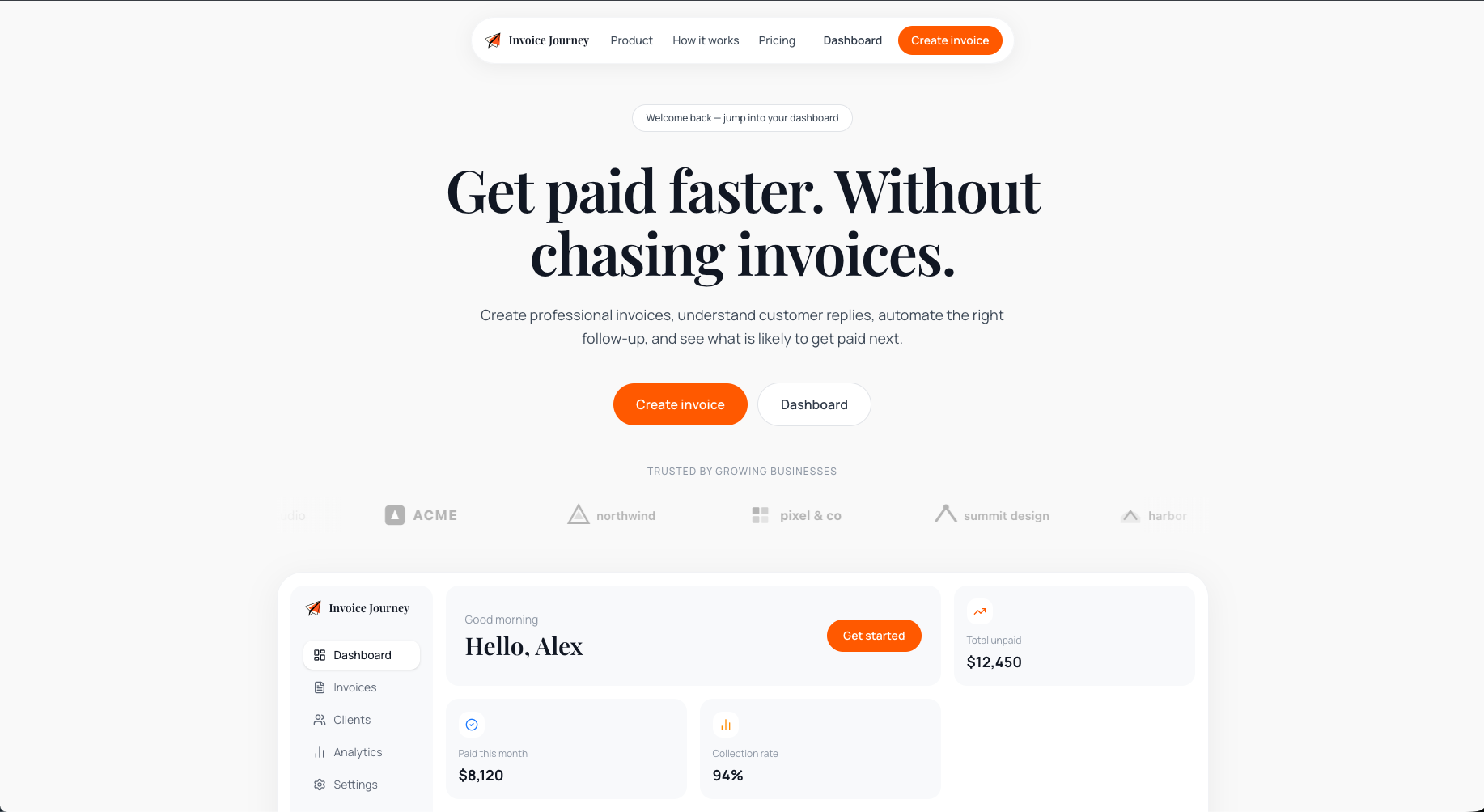
Treat every invoice like a delivery — from sent to paid
Sending an invoice was easy. Knowing whether it would get paid — and when — was not.
Clients should not need an account. Follow-up had to be automatic, professional, and based on what the invoice was actually doing.
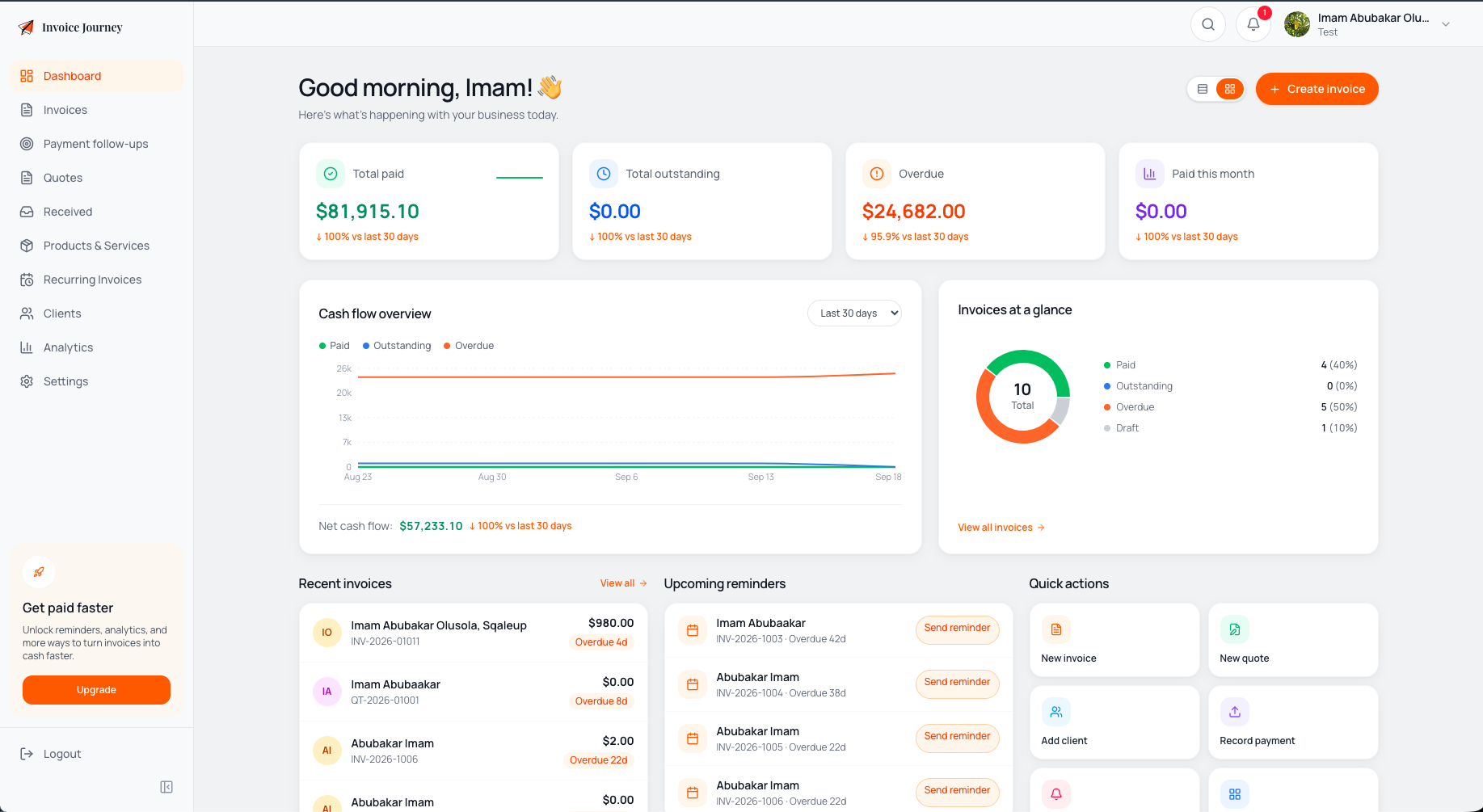
A live SaaS product at invoicejourney.com: tracking, reminders, buyer portal, and AI payment estimation.
Problem
Most invoicing tools stop at “send.” The invoice leaves as a PDF or a payment link, and the sender goes back to guessing. Did the client open it? Are they waiting on a PO? Is this one likely to pay this week or next month? Follow-up becomes a weekly hunt through inboxes.
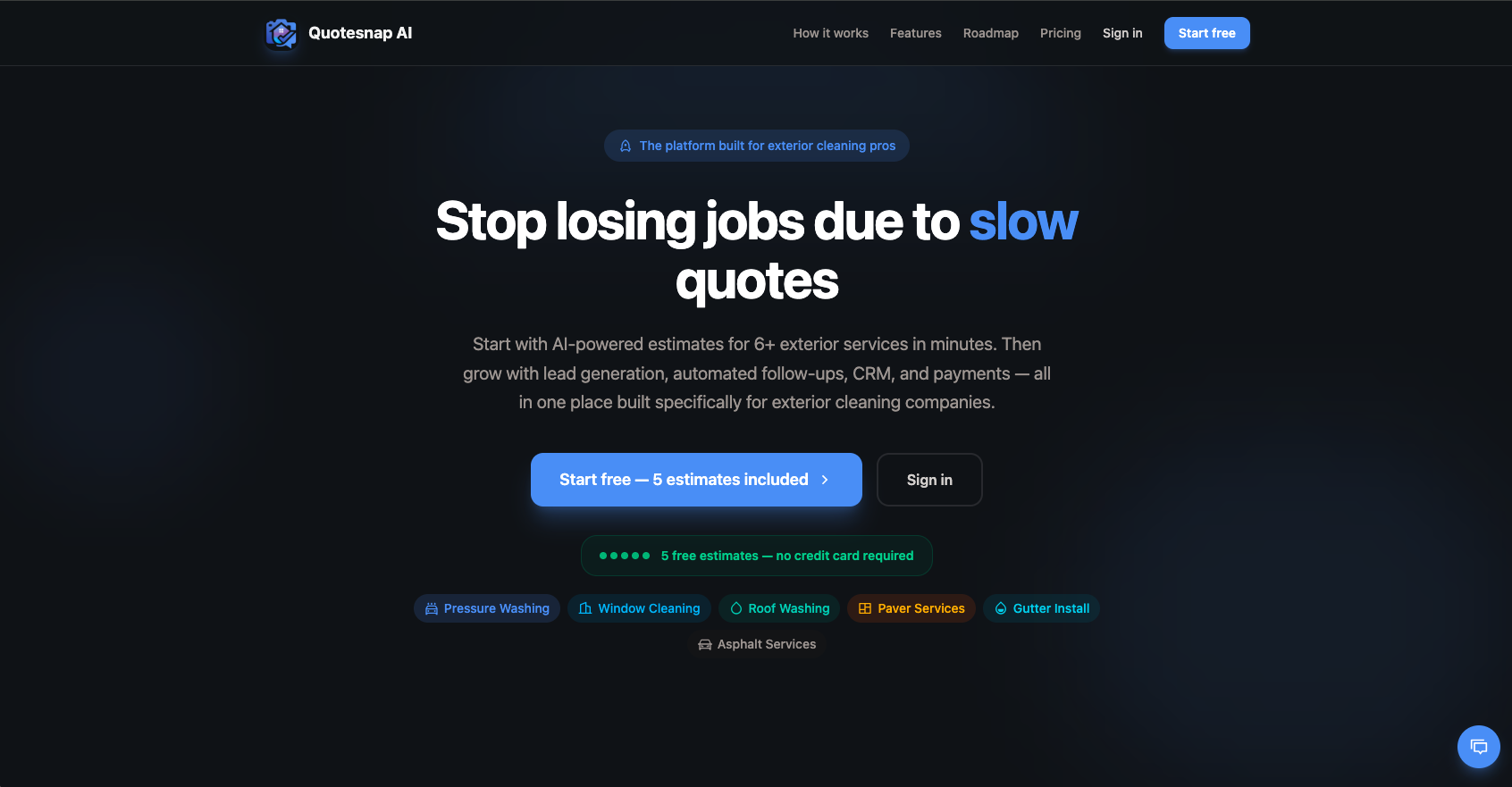
Invoice Journey was built as a Sqaleup product to treat an invoice the way a carrier treats a package: a visible journey from draft to paid, with the right nudge at each stage. It is a different technical problem from Quotesnap (field AI + maps) and Sqaleshop (multi-tenant commerce) — this one is event-driven billing, buyer-facing flows, and collection intelligence.
Constraints
- Buyers should view, approve, and pay without creating an account.
- International clients: multi-currency invoices, not a single-market template.
- Reminders must be timed to invoice state, not a blunt “nudge everyone on Friday” cron.
- An API for teams that already have a workflow, plus a product that works for a freelancer on day one.
- AI that predicts payment likelihood from history — useful only if the tracking events are trustworthy.
Architecture
The invoice record emits events (sent, opened, viewed, approved, paid). Reminders, AI estimates, and analytics all subscribe to that timeline.
Decisions
We modeled the product around state, not documents. A PDF is an export. The system of record is the journey: created, sent, opened, viewed, in review, approved, paid. That single decision made reminders, the buyer portal, and payment estimation the same feature family instead of three bolted-on tools.
Clients never need an account. A secure link is enough to view, comment, approve, and upload proof. That lowered friction for the payer — the person who actually controls cash — and forced the architecture toward tokenized public flows rather than a second login wall. AI payment estimation sits on top of client history. It is priced as a cash-flow feature, not as “we added a model.”
Implementation
- Invoice builder. Line items, taxes, discounts, templates, and multi-currency, sendable by email or public link.
- Lifecycle tracking. Sent, opened, viewed, approved, paid — visible to the sender the way a shipment is visible to a shipper.
- Buyer portal. Approve, pay, and upload payment proof without creating an account.
- Follow-up. Email and SMS reminders scheduled from invoice state, not from a static calendar.
- AI payment estimation. A forecast of when an invoice is likely to clear, based on that client’s history, so cash flow planning is not a spreadsheet guess.
- API. Teams that already issue invoices from another system can still run the journey, reminders, and tracking from Invoice Journey.
Results
Invoice Journey is live at invoicejourney.com. It is Sqaleup’s own SaaS product in billing and collections — a different capability set from commerce or field AI, and evidence that we design, ship, and operate production systems, not only client MVPs.
Lessons
- If the payer needs an account, you have already lost half of collections.
- AI on invoices is useless without a reliable event log. Track first, predict second.
- Billing products fail when they optimize for the sender’s PDF and ignore the buyer’s actual path to paying.